




Traditional hamam services follow a fixed order: steam, a kese scrub to lift dead skin, a foam massage, and a cold rinse, usually sold as one bundled visit rather than separate treatments. Istanbul hamams price this bundle from €40 at Şifa Hamamı to €110 at Hürrem Sultan Hamamı, as of September 2026, according to Istanbul Hamam’s own venue pages.
What Do Traditional Hamam Services Include?
| Option | Price | Duration |
|---|---|---|
| Cağaloğlu Hamamı | from €90 | 45-135 min |
| Çemberlitaş Hamamı | from €90 | – |
| Hürrem Sultan Hamamı | from €110 | 45-110 min |
| Gedikpaşa Hamamı | from €50 | 60-90 min |
| Şifa Hamamı | from €40 | 60-120 min |
| Turkish bath and spa, Laleli | from €50 | 50-125 min |
| Turkish bath and spa, Taksim | from €45 | 50-100 min |
Traditional hamam services in Istanbul group four elements into a single visit: steam, scrub, foam massage, and rinse, with variations layered on top depending on the venue. A kese scrub, done with a coarse woven mitt, and a foam massage using soap lather are the two constants that define a hamam service as distinct from a spa treatment.
Some venues add oil massage, a facial mask, or extended relaxation time in the steam room as upgrades. Historic hamams such as Çemberlitaş Hamamı and Cağaloğlu Hamamı price their standard service from €90 per person, while modern spa hamams in Taksim and Şişli start lower, from €45, as of September 2026, according to Istanbul Hamam’s own venue pages.
The difference in price generally tracks the building rather than the service itself, a four-hundred-year-old bathhouse costs more to enter than a contemporary spa offering the same sequence.
- Cağaloğlu Hamamı, from €90, 45 to 135 minutes, separate sections for men and women
- Hürrem Sultan Hamamı, from €110, 45 to 110 minutes, separate sections
- Şifa Hamamı, from €40, 60 to 120 minutes, mixed-gender hammam
- Turkish bath and spa, Taksim, from €45, 50 to 100 minutes, female therapists only
The Hamam Sequence, Room by Room
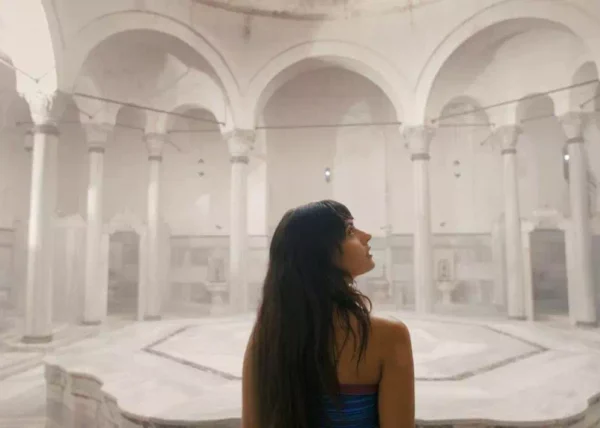
A hamam visit moves through three spaces in a set order: the cool entrance hall, the heated bathing hall, and back to the entrance hall to rest. Arriving guests undress in the entrance hall, called the soğukluk, and are given a peştemal, a thin woven cloth wrapped around the body in place of a towel.
From there the sequence moves into the sıcaklık, the hot marble hall, where the rest of the service takes place. Ending back in the cool hall for tea or rest closes the visit, though the length of that final stage depends on the hamam and how busy it is.
For a fuller walkthrough of each stage, the full Turkish bath process explained step by step covers the order in more detail.
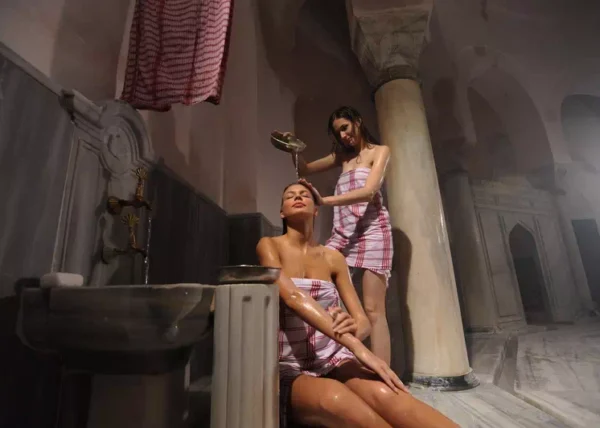
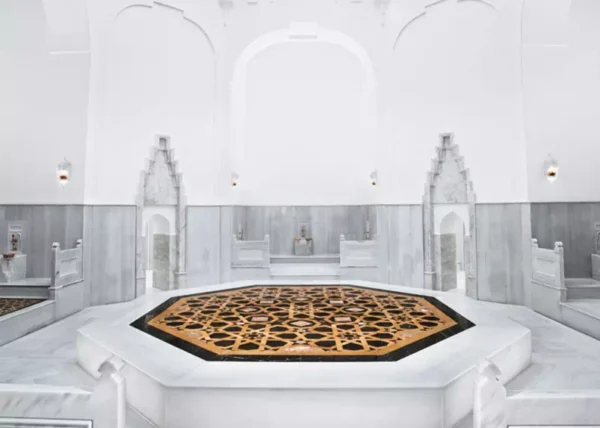
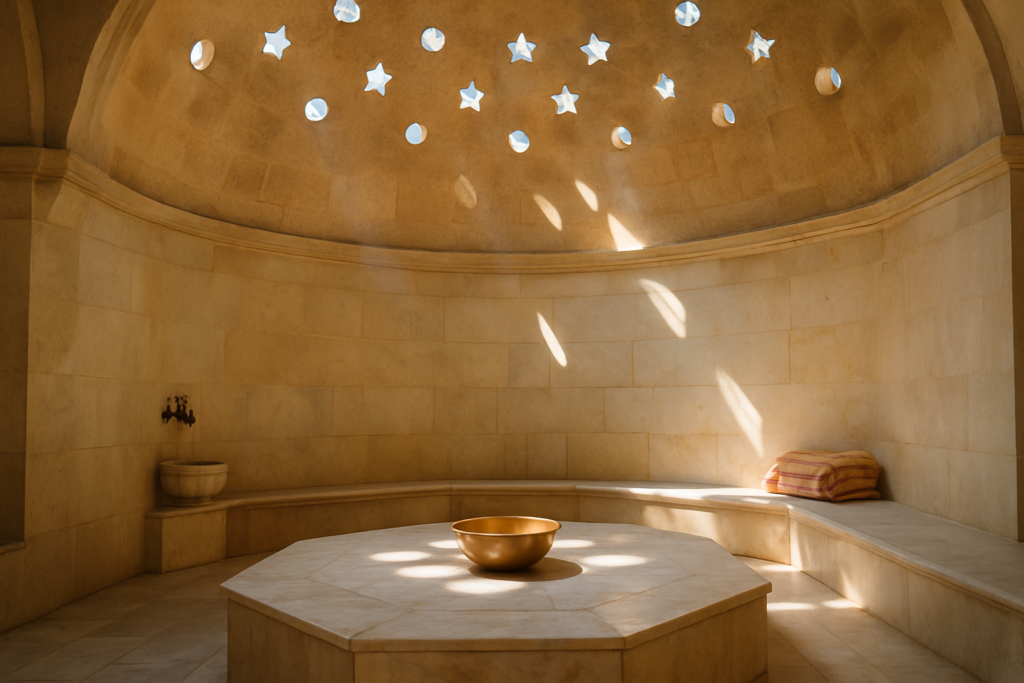
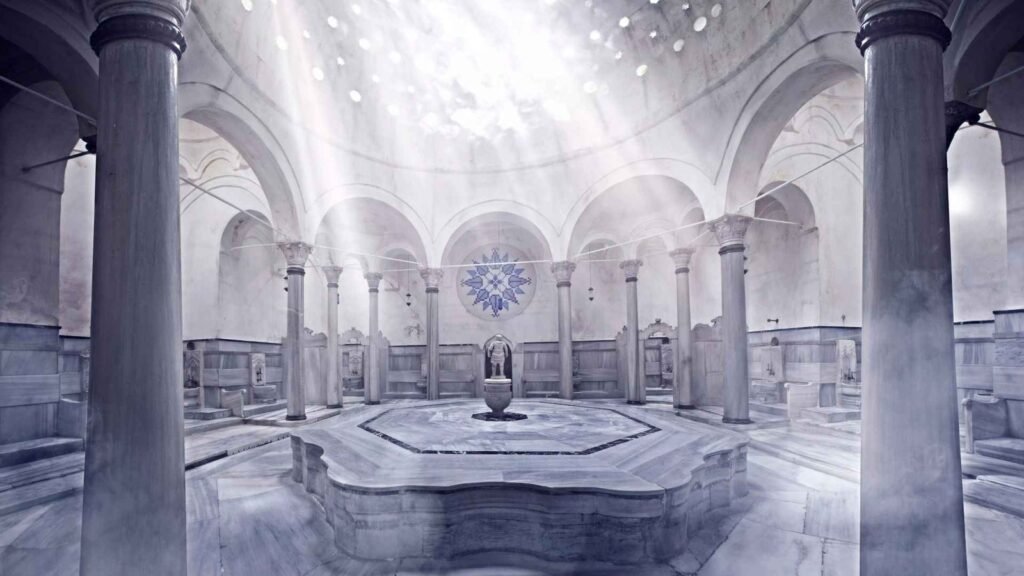
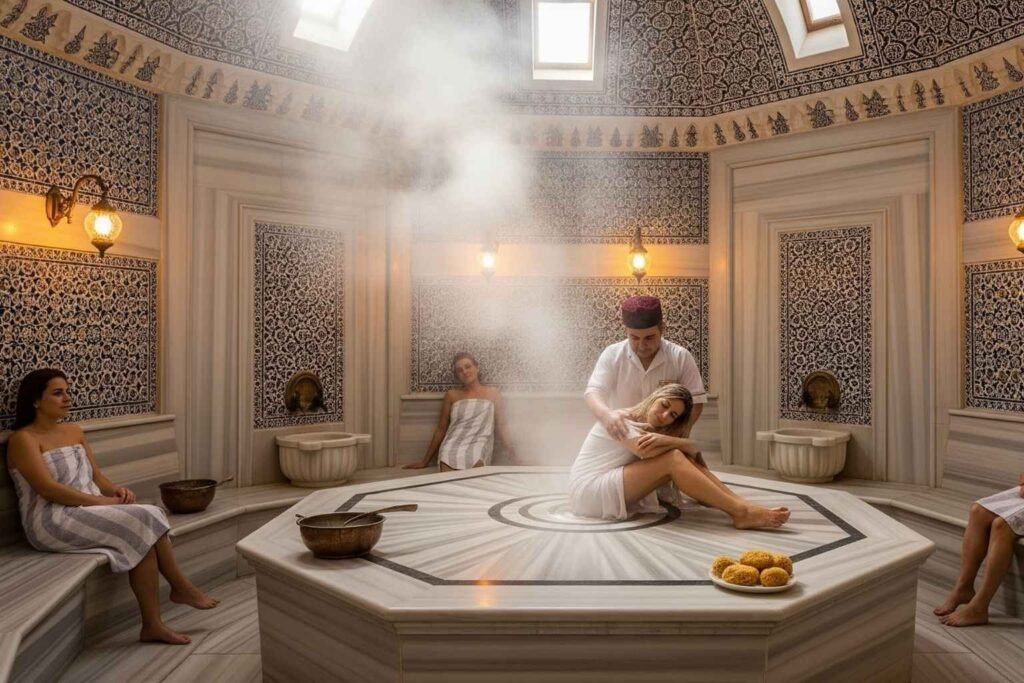
The centerpiece of the hot room is the göbek taşı, a raised heated marble platform where bathers lie to sweat and warm the skin before any scrubbing begins. Attendants call this stage the warm-up, and it is not timed strictly, visitors stay until the skin is warm enough for the kese to work efficiently.
Traditional hamams keep men’s and women’s sections fully separate, each with its own göbek taşı, entrance and attendant staff; a few modern venues, such as Şifa Hamamı, run a single mixed-gender hammam instead.
Attendants are called tellak for men and natır for women, and in Istanbul’s licensed hamams they are matched to the guest’s gender for the scrub and massage stages.
What Is a Kese Scrub and How Does It Feel?
A kese scrub is an exfoliation done with a coarse woven mitt, worked firmly over wet, warmed skin to lift dead skin cells that steam has already loosened. The sensation is closer to a firm buffing than a massage, visitors often see the removed skin rolling off in visible threads, which surprises first-timers more than it bothers them.
The scrub covers the arms, legs, back and torso, and takes only a few minutes per section since the steam has already done the softening work. No oils or products are used during this stage; it is water, heat and the mitt itself.
Readers who want to know what the sensation feels like before booking can read a detailed account of a first hamam visit for a fuller description of what happens at each stage.
How Does the Massage Differ From a Spa Massage?
The massage included in a traditional hamam service is a foam massage, not a deep-tissue or oil-based treatment, and it is shorter and lighter than what a spa visitor might expect. Attendants pile soap lather across the body using a cloth bag that traps air and produces a thick foam, then work it over the skin with broad, sweeping strokes.
The purpose is cleansing and relaxation rather than muscle work, and a hamam makes no claims about therapeutic or medical benefit, it is a wash, not a treatment. Some modern spa hamams, including the Laleli, Taksim and Şişli locations, offer an upgraded oil massage as an add-on beyond the standard foam stage.
Visitors who want to compare the historic version against the modern spa version before choosing can read this comparison of modern spa or traditional hammam options.
Steam, Scrub And Massage: The Practical Block
A full hamam visit runs anywhere from 45 minutes to about two hours, depending on the venue and which add-ons are booked. Cağaloğlu Hamamı and Hürrem Sultan Hamamı both offer sessions up to around two hours, while a standard visit at Gedikpaşa Hamamı or the Şişli spa location runs closer to an hour.
Hamams provide the peştemal, the kese mitt, and any towels needed during the visit, so guests do not need to bring bathing linens. Visitors should bring a swimsuit if they prefer not to bathe nude under the peştemal, sandals for the wet floors, and a change of clothes for afterward.
For a full packing list broken down by venue, see our guide on what to wear to a Turkish bath.
Booking is done online with instant confirmation, and most hamams ask guests to arrive a few minutes before the scheduled slot to change and receive a peştemal. Tipping the tellak or natır directly at the end of the service is customary, though it is separate from the price paid at booking.
For guidance on how much to leave and when, our tipping guide for Turkish hammams explains local practice. Anyone deciding how much time to set aside for the whole outing, including changing and rest afterward, should check how long a Turkish bath experience lasts before booking a slot.
Which Hamam Suits Which Visitor?
Couples wanting a historic setting with strict gender separation should look at Cağaloğlu Hamamı or Çemberlitaş Hamamı, both of which keep fully separate men’s and women’s sections with gender-matched attendants.
Visitors who want a mixed setting so a couple can bathe together should consider Şifa Hamamı, the one listed venue that runs as a single mixed hammam rather than split sections.
Families and solo travelers staying near Taksim or Şişli may prefer the modern spa locations, which run shorter sessions and are priced from €45, as of September 2026, according to the operator’s own listings.
Anyone weighing whether the historic price premium is worth paying over a modern spa can read our full answer on whether a Turkish bath is worth it before choosing.
Frequently Asked Questions
Do I need to book a specific attendant in advance?
No specific attendant can be requested at most Istanbul hamams; booking secures a time slot and gender-matched staff, not an individual therapist. Confirmation is instant once the booking is made online, and the venue follows its usual gender-matching rule for the scrub and massage stages.
Can couples do a hamam service together?
Only at hamams with a mixed-gender section, such as Şifa Hamamı, can couples bathe in the same room together. Everywhere else, sections for men and women are kept separate, though couples can still book the same time slot and meet afterward in a shared lounge.
Is the kese scrub painful?
The kese scrub is firm rather than painful, closer to a brisk buffing than anything abrasive on unprepared skin. Because the steam room softens the skin first, most visitors describe it as intense but not uncomfortable, and pressure can be adjusted by asking the attendant.
What should first-time visitors wear during the service?
Most hamams provide a peştemal to wear throughout the visit, and swimwear underneath is optional rather than required. Sandals help on the wet marble floors, and a full packing breakdown by hamam type is linked earlier in this article.
How far in advance should I book a hamam service?
Booking a few days ahead is generally enough, since hamams confirm slots instantly online rather than requiring long lead times. Popular historic hamams such as Çemberlitaş or Hürrem Sultan can fill specific time slots first, so booking earlier in the week helps for weekend visits.
Is a hamam visit suitable during Ramadan?
Hamams continue operating during Ramadan, though some adjust their schedules around fasting hours. Visitors planning a trip during that period should check hours in advance; our guide to visiting a Turkish bath during Ramadan covers what changes and what stays the same.
Traditional hamam services in Istanbul give visitors a clear, repeatable structure (steam, scrub, massage, rinse) whether the setting is a four-hundred-year-old bathhouse or a modern spa near Taksim. Choosing between them comes down to setting, gender arrangement, and budget rather than the service itself, since the core sequence stays the same everywhere.
Sessions across all of the venues covered here can be checked and confirmed instantly at book a traditional hamam service directly.
Plan your Istanbul hammam visit
Want to experience it yourself? Book Cağaloğlu Hammam with instant confirmation, or compare the city’s best hammams.
Comments 0
No comments yet. Be the first to share your thoughts!