




A hammam moves through five main steps. You warm up on a hot marble platform, an attendant scrubs you with a coarse kese mitt, a foam massage follows, then a warm and cool rinse, and finally you rest with tea. Each stage has its own room and rhythm, and the whole sequence takes about 45 to 90 minutes. Below is every step in order, what happens, how it feels and how long it lasts, so you walk in knowing exactly what comes next.
How Does a Turkish Hammam Work?
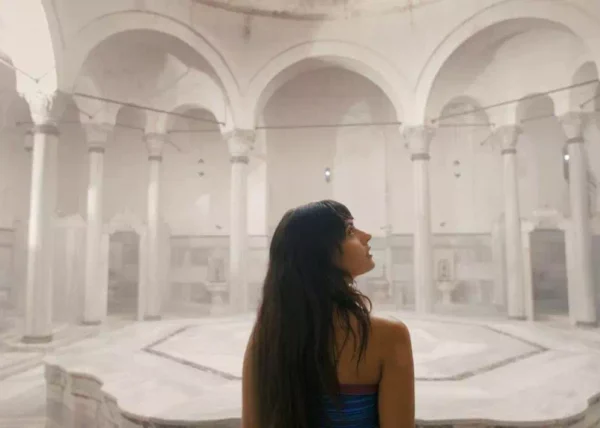
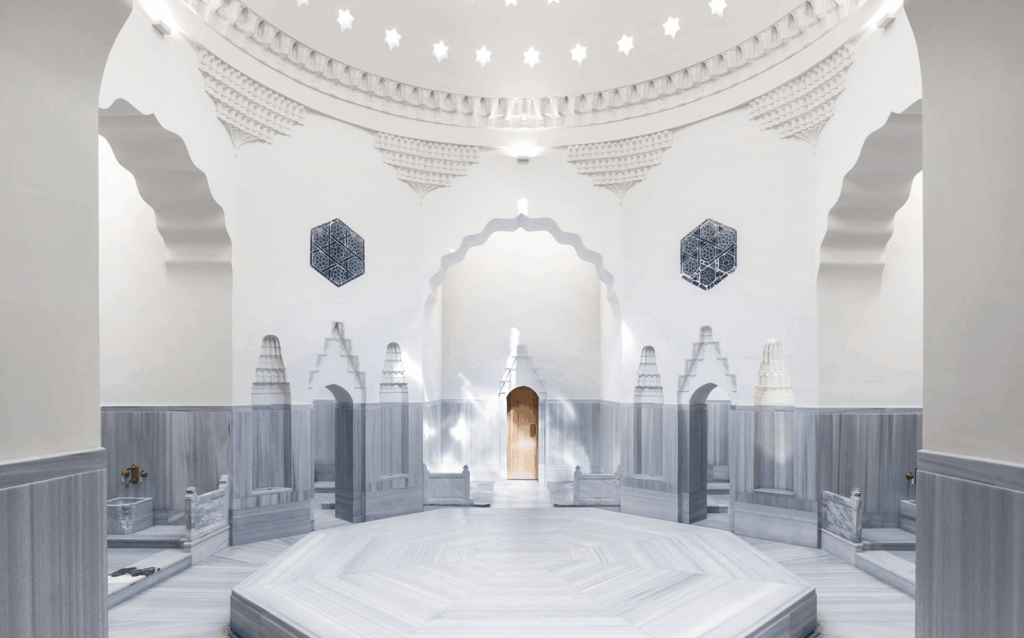
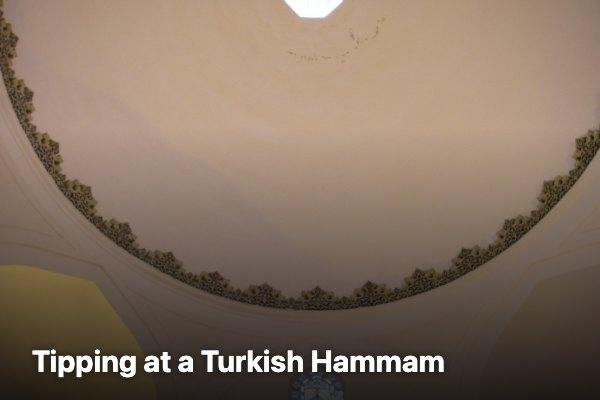
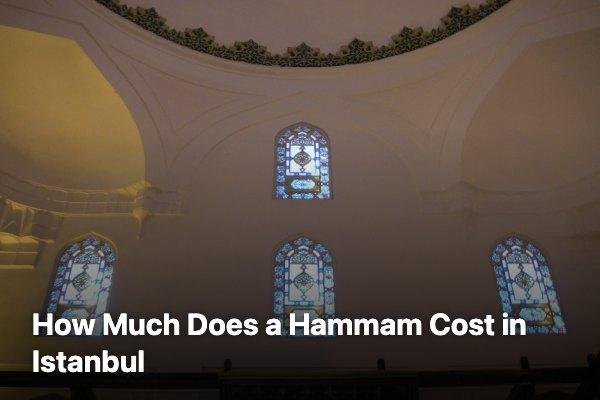
A traditional hammam is built around three rooms and one simple idea, heat your body, deep-clean it, then cool it down. You pass from the camekan, the entrance hall with changing cabins, into the sıcaklık, the hot domed room with the heated marble platform, and finish in the soğukluk, the cool room for resting. An attendant guides you through the scrub and the wash, so you never have to wonder what to do next.
The Hammam Process Step by Step
The ritual follows a set order from arrival to tea. The table gives the whole sequence at a glance, then each step is covered in detail below.
| Step | Roughly | What happens |
| 1. Arrival and changing | 5 to 10 min | Undress in a cabin and wrap a peştemal towel |
| 2. Warming up | 15 to 20 min | Lie on the hot göbek taşı marble as your pores open |
| 3. Kese scrub | 10 to 15 min | An attendant exfoliates you with a coarse mitt |
| 4. Foam massage | 10 to 15 min | A soft cloud of soap foam with a full-body massage |
| 5. Rinse and cool down | 5 to 10 min | Warm rinses, then a cool splash |
| 6. Rest and optional oil massage | 15 min plus | Tea in the cool room, or add an oil massage |
Step 1, Arrival and Changing
You arrive at the camekan, the entrance hall lined with private changing cabins. You choose your package at reception, undress in a cabin, lock your belongings away, and wrap a peştemal, the thin cotton cloth that stays on the whole time. Many hammams hand you wooden clogs for the wet marble. This part takes five to ten minutes, and it sets the calm, unhurried pace of everything that follows.
Step 2, Warming Up on the Göbek Taşı
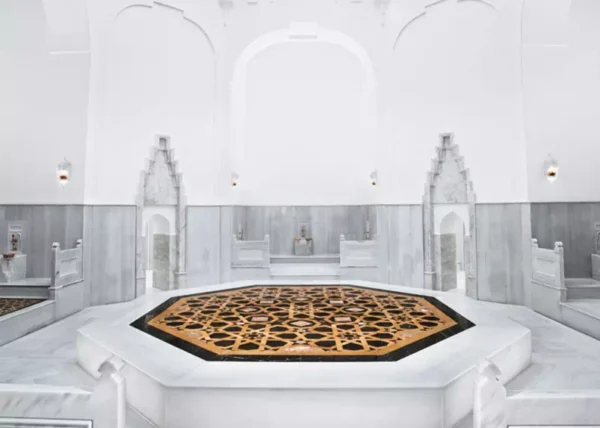
Next you move into the sıcaklık, the hot room under the dome, where the göbek taşı, a large heated marble platform, sits in the centre. You lie back on the warm stone for fifteen to twenty minutes while the steam rises, your muscles loosen and your pores open. This warming stage is what makes the scrub that follows so effective, so there is nothing to do but breathe and let the heat work.
Step 3, the Kese Body Scrub
Once your skin is soft, an attendant, the tellak for men or the natır for women, scrubs you from head to toe with a kese, a coarse exfoliating mitt. Rolls of dead skin lift away, which looks dramatic and leaves you remarkably smooth. It lasts ten to fifteen minutes and feels firm and brisk rather than painful. This is the heart of the ritual, the deep clean a normal shower cannot match.
Step 4, the Foam Massage
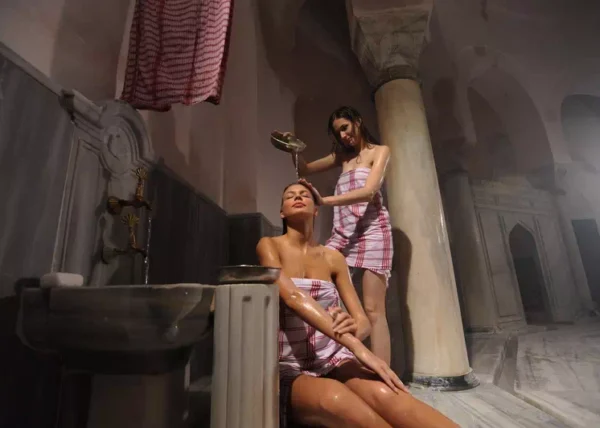
After the scrub comes the foam massage, the part most people remember. The attendant works a mountain of warm soap bubbles from a cloth bag and covers you in it, then massages your back, shoulders and limbs through the foam. It runs ten to fifteen minutes and is soothing rather than deep, more cloud than pressure. Your hair is usually washed at the end of it.
Step 5, the Rinse and Cool Down
The attendant rinses you with bowls of warm water poured over the head and shoulders, washing the foam away. A final cooler splash closes the pores and wakes the body. This quick stage, around five to ten minutes, marks the end of the active part of the bath, and you step out of the hot room feeling light and clean.
Step 6, Rest, Tea and an Optional Oil Massage
Finally you move to the soğukluk, the cool resting room, wrap up in dry towels and sit with a glass of Turkish tea or a cold drink. This is the moment to let your body settle and your heart rate come down, so do not rush it. If you booked an add-on, an oil massage usually happens here, stretching the visit by another fifteen to thirty minutes.
What Should You Do After the Hammam?
After a hammam, take it slow and drink plenty of water, since the heat and the scrub leave you a little drained and very clean. Moisturise your fresh skin, avoid heavy sun or a hard workout for the rest of the day, and give yourself an hour to enjoy the calm. Many people feel sleepy and deeply relaxed, so it pairs well with a quiet evening.
- Rehydrate with water or tea
- Moisturise, your skin is freshly exfoliated
- Skip strong sun and intense exercise that day
- Plan a relaxed evening, the calm lingers
How Do You Book a Hammam in Istanbul?
Book online ahead of your visit, pick the hammam and the package, a basic bath, a scrub and foam, or a version with an oil massage, then choose a time slot. The historic baths fill up on weekends and in summer, so reserve early. You can hold your spot now on istanbulhamam.com with instant confirmation and free cancellation up to 24 hours before.
- Choose a historic hammam or a modern spa hammam
- Pick the package that includes the steps you want
- Reserve early for weekends and the high season
- Arrive ten minutes ahead with your confirmation
Frequently Asked Questions
How long does a hammam take?
About 45 to 90 minutes for the full sequence, longer with an oil massage or a slow rest at the end.
Do you wash yourself or does an attendant do it?
In a full-service bath, an attendant scrubs, washes and massages you. A self-service bath lets you use the marble and the steam and wash yourself.
Does the kese scrub hurt?
No. It is firm and you will see dead skin roll away, but it feels brisk rather than painful, and your skin is smooth afterwards.
What rooms does a hammam have?
Three. The camekan changing hall, the hot sıcaklık with the göbek taşı, and the cool soğukluk for resting.
Do you have to do every step?
No. You can skip the foam massage or the oil add-on, though the warm-up and the scrub are the core of the ritual.
Should you tip the attendant?
Yes, a tip of around ten to fifteen percent at the end is customary.
Can couples do the steps together?
Some modern spa hammams have couples rooms, while traditional baths keep men and women in separate sections.
Comments 35
[…] spa en libre-service. Pour la visite complète avec les durées à chaque stade, consultez le guide étape par étape du processus complet du hamam du […]