
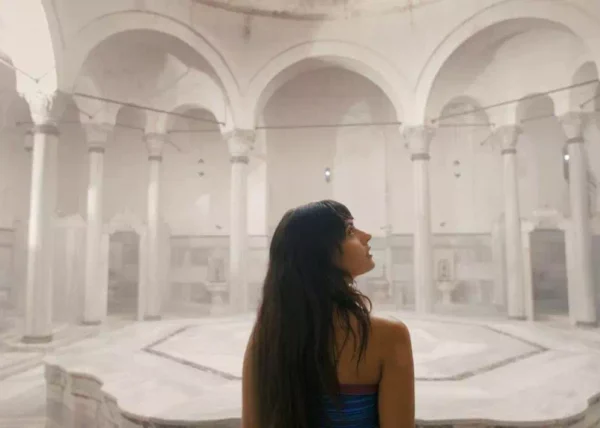




Üsküdar’s oldest surviving hamam is the Mihrimah Sultan Hamamı, better known locally as the Çinili Hamam, built in the 16th century on the Asian shore of the Bosphorus.
The building stands as a protected historic structure today rather than a staffed bathhouse, so visitors wanting the full ritual with a scrub and massage book it across the water in the Old City.
- Location: Üsküdar, Asian shore of the Bosphorus
- Built for: Mihrimah Sultan, daughter of Süleyman the Magnificent
- Current status: a protected historic building, not a walk-in bathhouse
- Nearest staffed hamams: the Old City, a short ferry or bridge crossing away
- Typical visit length elsewhere: roughly 45 minutes to over two hours, depending on the package
What Is Üsküdar’s Oldest Still-Operating Hamam?
| Option | Price | Duration |
|---|---|---|
| Cağaloğlu Hamamı | from €90 | 45-135 min |
| Çemberlitaş Hamamı | from €90 | – |
| Hürrem Sultan Hamamı | from €110 | 45-110 min |
| Gedikpaşa Hamamı | from €50 | 60-90 min |
| Şifa Hamamı | from €40 | 60-120 min |
| Turkish bath and spa, Laleli | from €50 | 50-125 min |
| Turkish bath and spa, Taksim | from €45 | 50-100 min |
The Çinili Hamam is the building most historians point to as Üsküdar’s oldest hamam still standing. It takes its name from the glazed tilework that once lined its walls.
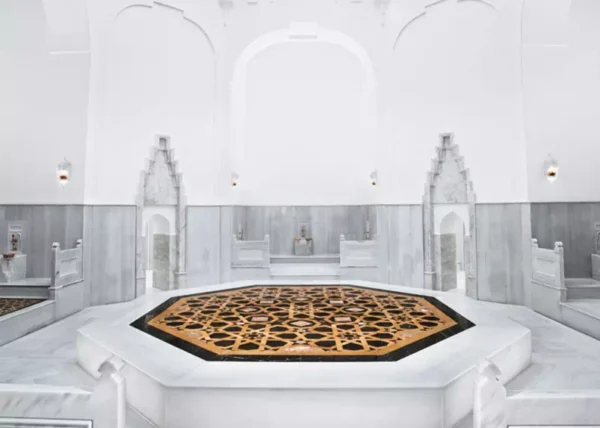
The hamam was commissioned for Mihrimah Sultan and is attributed to the imperial architect Mimar Sinan, the same figure behind many of the capital’s grandest mosques. It was built as a çifte hamam, a double bath with separate wings for men and women under one roof, a common layout for neighborhood hamams serving a mixed community.
What makes the building notable today is survival rather than service. Four centuries of use, earthquakes and changing neighborhoods have left many of Istanbul’s smaller district hamams closed, converted, or standing empty.
The Çinili Hamam in Üsküdar belongs to that group: a structure worth seeing for what it tells you about Ottoman bathing architecture, not a place to currently book a scrub and massage.
A Short History of the Mihrimah Sultan Hamamı
The hamam was part of a wider wave of imperial building commissioned by Ottoman royal women in the 16th century, many of them attached to mosque complexes or markets that funded charitable works.
Mihrimah Sultan funded two mosque complexes in Istanbul, one in Üsküdar and one at Edirnekapı, and the Çinili Hamam sat within the Üsküdar network of buildings serving the surrounding district. The tiles that gave the hamam its name were part of a broader fashion for Iznik-style ceramic work in Ottoman religious and civic buildings of the period.
For a comparison point, Istanbul’s other famous tiled bath, on the opposite side of the Golden Horn, is covered in detail in a guide to Istanbul’s oldest surviving tiled hamam, which is open for bookable visits in a way the Üsküdar building currently is not.
How Do You Get to Üsküdar’s Historic Hamam?
Üsküdar sits on the Asian shore, reached from the European side by a short Bosphorus ferry crossing or by metro under the strait.
Ferries run from several piers on the European side, including Eminönü, Karaköy and Beşiktaş, and the crossing is one of the simplest ways to see the Bosphorus waterfront without booking a dedicated cruise.
General transport planning for Istanbul, including ferry and metro connections, is covered on Türkiye’s official tourism portal, which is a useful starting point before a first visit.
Once in Üsküdar, the historic hamam sits within walking distance of the ferry terminal and the district’s older mosques, making it an easy stop on a walking route through the neighborhood rather than a destination that needs its own booking slot.
What Happens Inside a Traditional Hamam?
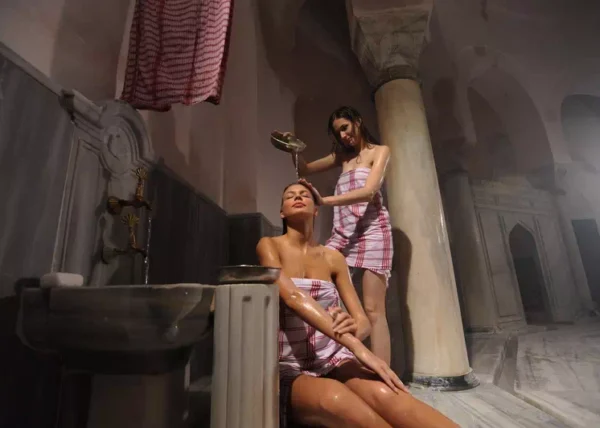
A traditional hamam visit follows a fixed order: entrance and changing, warming on a heated marble platform, a scrub, a foam massage, and a final rinse.
At the staffed hamams across the Old City, the sequence runs roughly like this:
- Arrival and changing, where staff hand over a peştemal, a thin woven wrap used instead of a towel, and show you to the warm room.
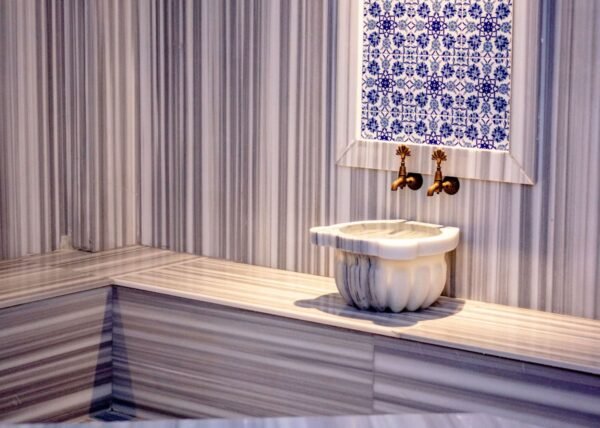
- Warming on the göbek taşı, a heated marble platform at the center of the hot room, usually for a set number of minutes before the scrub begins.
- Exfoliation with a kese, a coarse mitt used by the attendant to remove dead skin, usually the step first-timers remember most.
- A foam massage, applied by hand across the body while you remain on or near the marble platform.
- A final rinse with warm, then cooler, water, after which you move to the cooling room to relax before dressing.
Male attendants are traditionally called tellak and female attendants natır; most bookable hamams in Istanbul match the attendant’s gender to the bather’s. A fuller walkthrough of each stage, with timing notes, is laid out in a step-by-step guide to the hamam ritual.
What Should You Bring and What Is Provided?
Bring very little: swimwear if you prefer to wear it, and nothing else is strictly required. Hamams provide the wrap, towels and basic toiletries as part of the package.
A short checklist covers most first-time visitors:
- Swimwear, if you want an extra layer under the peştemal (not required at most venues)
- Flip-flops or sandals, useful on wet marble floors, though slippers are usually provided
- A phone or watch left in a locker, since the hot room is not the place for electronics
- A booking confirmation on your phone, since most venues check you in against an online reservation
Session length varies by package and venue, from a short scrub-and-rinse visit to a longer package with oil massage added on. A breakdown of how package length affects the total visit time is covered in a guide to how long a hamam visit takes, useful when planning a visit around a tight Istanbul itinerary.
Where Can You Book a Full Hamam Experience Near Üsküdar?
The closest bookable hamams to Üsküdar sit across the Bosphorus in the Old City, where several centuries-old bathhouses still operate daily with online booking and instant confirmation.
Prices and session lengths differ by venue. As of October 2026, according to the operator’s own booking pages, entry across the platform starts from €40 per person, with the historic Old City hamams priced higher than the modern spa-style locations elsewhere in the city.
| Hamam | Area | Price from | Typical duration | Sections |
|---|---|---|---|---|
| Cağaloğlu Hamamı | Old City | €90 | 45-135 minutes | Separate, men and women |
| Çemberlitaş Hamamı | Old City | €90 | Varies by package | Separate, men and women |
| Hürrem Sultan Hamamı | Old City | €110 | 45-110 minutes | Separate, men and women |
| Gedikpaşa Hamamı | Old City | €50 | 60-90 minutes | Separate, men and women |
| Şifa Hamamı | Sultanahmet | €40 | 60-120 minutes | Mixed-gender |
The Hürrem Sultan Hamamı, built beside Ayasofya, is the most ornate of the group and is covered in more depth in a guide to the restored Hürrem Sultan hamam near Ayasofya. For visitors deciding between neighborhoods on the European side, a neighborhood-by-neighborhood guide to Istanbul’s hamams lays out the walking distance from each tram stop.
First-timers unsure of hamam customs, including what to say to an attendant and how changing rooms work, can check an etiquette guide for first-time hamam visitors before arriving.
Which Hamam Suits Which Visitor?
Budget and time decide the choice more than anything else: Şifa Hamamı suits a shorter, lower-cost visit, Hürrem Sultan suits a slower, more formal one.
Couples travelling together often prefer venues with separate men’s and women’s sections booked at the same time, so each partner has an attendant of their own gender; the Old City hamams above all run this way.
Families with children tend to do better at the modern spa-style locations in Laleli, Taksim or Şişli, where sessions run shorter and staff are used to a more relaxed pace.
Visitors short on time between a ferry crossing and an evening flight tend to pick the fastest package at whichever venue is closest to their hotel, since the sequence is the same regardless of the building’s age.
Frequently Asked Questions
Can you still bathe at the Mihrimah Sultan Hamamı in Üsküdar?
No. The building survives as a historic structure, not as a staffed bathhouse accepting bookings, so a full hamam visit needs to be booked at a different venue.
Is a hamam visit appropriate for a first-time tourist?
Yes. Staff at Istanbul’s bookable hamams are used to first-timers and explain the sequence on arrival, so no prior knowledge of the ritual is needed.
How do I book a hamam visit in Istanbul?
Through the venue’s own online booking page, which confirms your time slot instantly and lets you choose the package length before you arrive.
What should I wear during a hamam visit?
Most venues provide a peştemal wrap and expect nothing more underneath, though swimwear is accepted if you prefer an extra layer.
Are men and women bathed in the same room?
Usually not. Most hamams on this list run separate sections for men and women with gender-matched attendants; a small number run mixed-gender sessions, as noted in the table above.
How long does a typical hamam visit take?
Between roughly 45 minutes and over two hours, depending on the package and venue, with longer sessions adding an oil massage after the scrub and rinse.
Üsküdar’s oldest hamam is worth seeing on a walk through the district, but the actual bath, the scrub, the warm marble and the foam massage, happens at the staffed venues on the Old City side. Book a hamam visit through Istanbul Hamam to confirm a time slot before you arrive.
Plan your Istanbul hammam visit
Planning your trip? Reserve Cağaloğlu Hammam online in seconds, or see how Istanbul’s hammams compare.
Comments 0
No comments yet. Be the first to share your thoughts!