
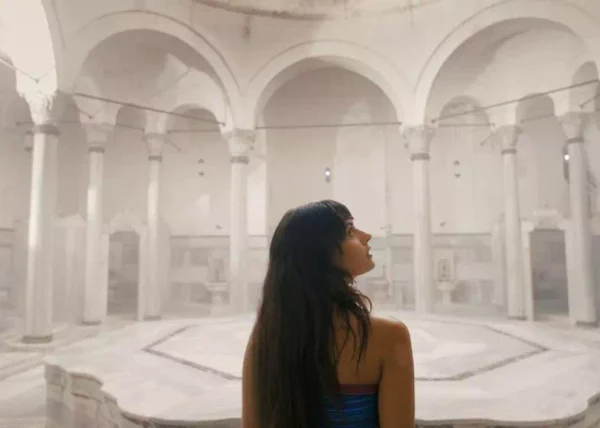
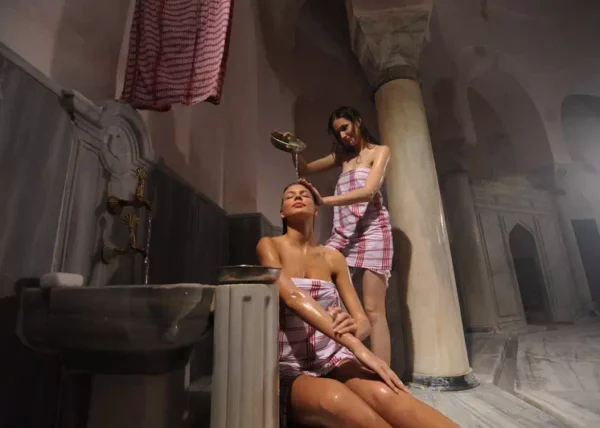
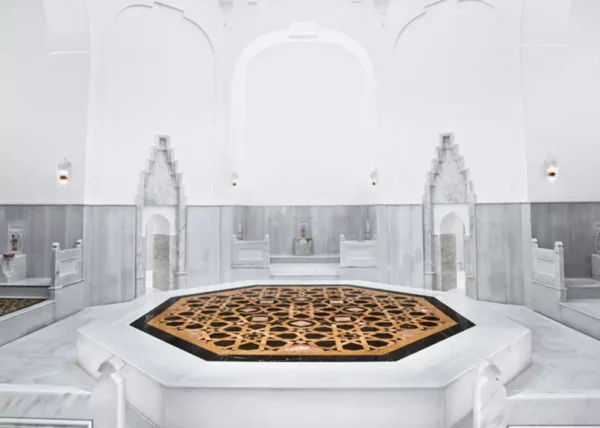




A kese scrub is a full-body exfoliation done with a coarse mitt on the heated marble of a Turkish bath. It feels like firm, repeated scraping, not painful but noticeably rough, and it removes a surprising amount of dead skin in under fifteen minutes.
- What it is: exfoliation with a woven mitt called a kese, done by an attendant
- How long: usually 10-15 minutes within a 45-135 minute hamam session
- Who does it: a tellak for men, a natır for women, matched to your gender
- What it feels like: firm pressure and friction, warm water throughout, no pain
What Is a Kese, Exactly?
| Option | Price | Duration |
|---|---|---|
| Cağaloğlu Hamamı | from €90 | 45-135 min |
| Çemberlitaş Hamamı | from €90 | – |
| Hürrem Sultan Hamamı | from €110 | 45-110 min |
| Gedikpaşa Hamamı | from €50 | 60-90 min |
| Şifa Hamamı | from €40 | 60-120 min |
| Turkish bath and spa, Laleli | from €50 | 50-125 min |
| Turkish bath and spa, Taksim | from €45 | 50-100 min |
A kese is a coarse mitt, usually woven from raw silk or cotton, worn on the attendant’s hand like a glove. It is the tool, not the ritual itself.
The texture sits somewhere between a loofah and sandpaper. On dry skin it would scratch; on skin softened by steam and warm water, it lifts dead skin in visible grey rolls without breaking the surface.
Attendants in Istanbul’s hamams, called tellak for men and natır for women, are trained in the pressure to use on different parts of the body, lighter over the stomach and chest, firmer on the back, arms and legs.
How Does a Kese Scrub Feel?
It feels like brisk, repeated scraping, rough and warm rather than sharp or stinging. Most first-timers describe it as oddly satisfying once the initial surprise passes.
The sensation changes by body part. Shoulders and the back take firm, confident strokes. The stomach and inner arms get a gentler pass.
None of it should hurt; if the pressure feels wrong, you can ask the attendant to ease off, even without shared language, by a hand gesture.
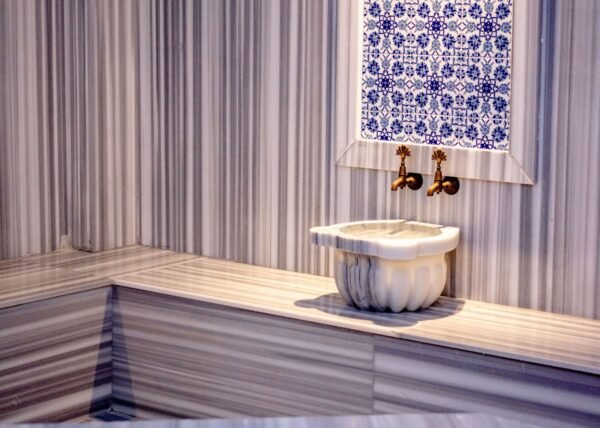
The room itself does most of the preparation. Lying on the heated marble platform, called the göbek taşı or belly stone, for ten to twenty minutes beforehand opens the pores and softens the skin, which is why the scrub that follows barely registers as abrasive.
What Happens Before the Scrub?
Before the kese, you warm up on the heated marble platform at the centre of the hamam, alone or with other bathers of the same gender section. This step typically runs ten to twenty minutes.
You arrive, change, and are given a peştemal, the thin cotton wrap worn throughout the visit. Staff direct you to the hot room, where the heated stone and ambient steam raise your body temperature gradually.
This warming stage matters more than it looks. Cold, dry skin resists the kese; warm, damp skin releases dead cells easily, which is the entire mechanism behind the scrub working without irritation.
What Happens After the Scrub?
After the kese, most hamam sessions move into a foam massage, followed by a final cold-water rinse. The order rarely changes across venues.
The foam step uses a cloth bag filled with soapy water, shaken until it produces a thick lather that the attendant spreads and works over your whole body. It feels soft and almost weightless compared to the scrub, a deliberate contrast.
The visit closes with a rinse of cool water, which many first-timers find bracing after the heat of the stone room. Some hamams follow this with a short massage or rest period; details of the full sequence, including where oil or extended massage fits in, are laid out on the site’s guide to steam, scrub and massage services.
Is the Kese Scrub Painful or Uncomfortable?
No. Done correctly, a kese scrub is firm but not painful, and any mild redness fades within an hour.
The friction can feel intense on the first pass, particularly for visitors who have never had their skin worked on directly. That intensity is normal and is simply the sensation of dead skin being removed, not a sign anything is wrong.
Sensitive skin, recent sunburn, or open cuts are reasons to mention your situation to staff before the session starts, since attendants can adjust pressure or skip an area. A hamam visit is a cleaning ritual, not a medical treatment, so there is no therapeutic claim attached to it beyond exfoliation and relaxation.
What Should I Bring to a Kese Scrub Session?
Bring very little: swimwear if you prefer it under the peştemal, flip-flops, and a change of clothes for afterward.
- Swimwear, optional, since a peştemal wrap is provided
- Flip-flops or sandals for wet marble floors
- A hair tie if your hair is long
- A phone case or dry bag if you want photos beforehand, since phones generally stay in lockers during the session
Towels, the kese mitt itself, soap, and the peştemal are supplied by the hamam. You do not need to bring your own kese mitt or shampoo unless you have a specific preference.
Which Istanbul Hamam Is Best for a First Kese Scrub?
Cağaloğlu Hamamı and Çemberlitaş Hamamı suit visitors who want the historic Ottoman building alongside the scrub; Şifa Hamamı and the Laleli bath suit those wanting a shorter, lower-cost session.
Cağaloğlu Hamamı, in the Old City, starts from €90 per person as of October 2026 according to the operator’s own booking pages, with sessions running from 45 up to 135 minutes depending on the package chosen.
Çemberlitaş Hamamı, also in the Old City and dating to the sixteenth century, lists the same starting price of €90 per person as of October 2026, with separate sections and gender-matched attendants.
For a lower starting price, Şifa Hamamı in Sultanahmet begins from €40 per person as of October 2026, in a mixed-gender hammam setting with gender-matched therapists, and sessions run 60 to 120 minutes.
Visitors staying near Taksim or Şişli can skip the Old City crossing entirely: both neighbourhood baths start from €45 per person as of October 2026, run 50 to 100 minutes, and use female therapists only. The full room-by-room explanation of what each package includes sits on the site’s page covering the hamam service sequence.
| Hamam | Area | Price from (Oct 2026) | Duration |
|---|---|---|---|
| Cağaloğlu Hamamı | Old City | €90 | 45-135 min |
| Çemberlitaş Hamamı | Old City | €90 | varies |
| Hürrem Sultan Hamamı | Old City | €110 | 45-110 min |
| Şifa Hamamı | Sultanahmet | €40 | 60-120 min |
| Laleli bath and spa | Laleli | €50 | 50-125 min |
How Do I Book a Hamam Visit With a Kese Scrub?
Booking is done directly online, with instant confirmation, by choosing a venue and time slot a few days ahead.
Each listing shows what is included, whether the scrub is paired with a foam massage, and the gender arrangement of the therapists, so you can match the session to your comfort level before paying.
A clear account of how the attendant moves through each stage, from the warming platform to the final rinse, is covered in the site’s overview of the steam, scrub and massage sequence.
Couples and families booking together should check the section arrangement first, since some venues split men and women entirely while others, like Şifa Hamamı, offer a mixed setting.
Frequently Asked Questions
What does a kese scrub actually remove?
It removes dead skin cells built up on the surface, visible as small grey rolls during the scrub itself. It is a physical exfoliation, not a deep cleaning treatment.
How long does the kese scrub part take?
The scrub itself usually takes 10 to 15 minutes, within a full hamam session that runs anywhere from 45 to 135 minutes depending on the venue and package chosen.
Does the kese scrub hurt?
No, it should not hurt. It feels firm and abrasive but not sharp, and any redness afterward fades within an hour. Tell the attendant if pressure feels too strong.
Can I request a specific gender of attendant?
Yes. Istanbul’s hamams, including Cağaloğlu, Çemberlitaş and the Taksim and Şişli baths, match attendants to your gender, with tellak for men and natır for women.
Do I need to bring my own kese mitt?
No. The mitt, along with towels, soap and the peştemal wrap, is provided by the hamam as part of the session.
Is the kese scrub suitable for sensitive skin or sunburn?
Mention it to staff before the session starts. Attendants can lighten pressure or skip affected areas, but sunburned or broken skin is generally better left to heal first.
Booking a session that includes the kese scrub takes a few minutes from a phone, with instant confirmation and no need to arrive speaking Turkish. Reserve your preferred hamam and time slot directly at the Istanbul Hamam booking page.
Comments 0
No comments yet. Be the first to share your thoughts!