




Istanbul’s most famous hamams are Ottoman bathhouses built from the 1500s onward, still working today on the same marble platforms their first bathers used. Cağaloğlu Hamamı, Çemberlitaş Hamamı and Hürrem Sultan Hamamı are the three most visited, each attached to a mosque or sultan’s commission and each still following the same room sequence as of October 2026.
- Oldest in daily use: Çemberlitaş Hamamı, built 1584
- Best known architecture: Hürrem Sultan Hamamı, designed by the imperial architect Sinan
- Typical visit length: 45 to 135 minutes depending on the package
- What’s provided: a peştemal (woven wrap), slippers and the attendant’s service
What makes a hamam “famous” in Istanbul?
| Option | Price | Duration |
|---|---|---|
| Cağaloğlu Hamamı | from €90 | 45-135 min |
| Çemberlitaş Hamamı | from €90 | – |
| Hürrem Sultan Hamamı | from €110 | 45-110 min |
| Gedikpaşa Hamamı | from €50 | 60-90 min |
| Şifa Hamamı | from €40 | 60-120 min |
| Turkish bath and spa, Laleli | from €50 | 50-125 min |
| Turkish bath and spa, Taksim | from €45 | 50-100 min |
Fame here means continuous use since the Ottoman period, in a building designed by a named imperial architect, usually tied to a sultan, a mosque complex or a historic bazaar.
Cağaloğlu Hamamı, Çemberlitaş Hamamı and Hürrem Sultan Hamamı all meet that test. They sit in the Old City, within walking distance of each other and of the Hagia Sophia and Topkapı Palace.
Smaller neighbourhood hamams, such as Gedikpaşa Hamamı, are older in some cases but less documented and less visited by foreign travellers, which is part of why the three main names dominate every list.
How old are Istanbul’s most famous hamams?
The oldest of the three main hamams dates to 1584, the newest to the 1550s building campaign under Sinan.
Çemberlitaş Hamamı was commissioned by Nurbanu Sultan, wife of Selim II, and opened in 1584. It was built to fund a nearby madrasa and soup kitchen, a common Ottoman practice where a bathhouse’s income supported a charitable complex.
Hürrem Sultan Hamamı, named after Hürrem Sultan (known in Europe as Roxelana), was designed by Mimar Sinan, the chief imperial architect responsible for the Süleymaniye Mosque. Cağaloğlu Hamamı is the youngest of the three, built in 1741, and is often cited as the last large hamam built under the Ottoman sultans before building styles shifted toward European influence.
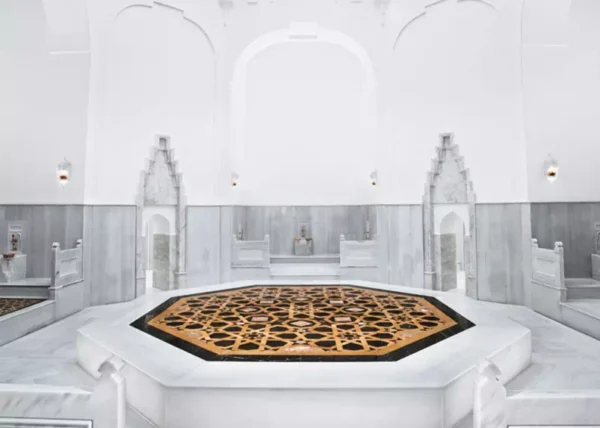
All three buildings have been restored at various points, but the floor plans, the marble platforms and the domed bathing halls are original. Readers planning a first visit to any of the city’s older bathhouses may want the fuller district breakdown in our guide to authentic hamams by Istanbul district.
What does hamam architecture actually look like?
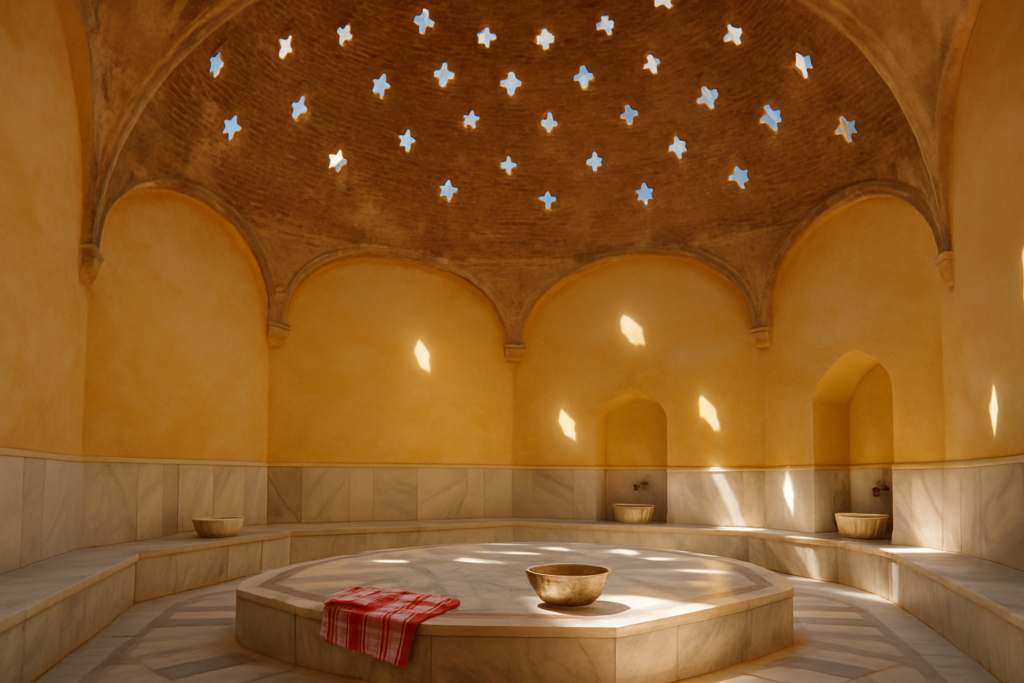
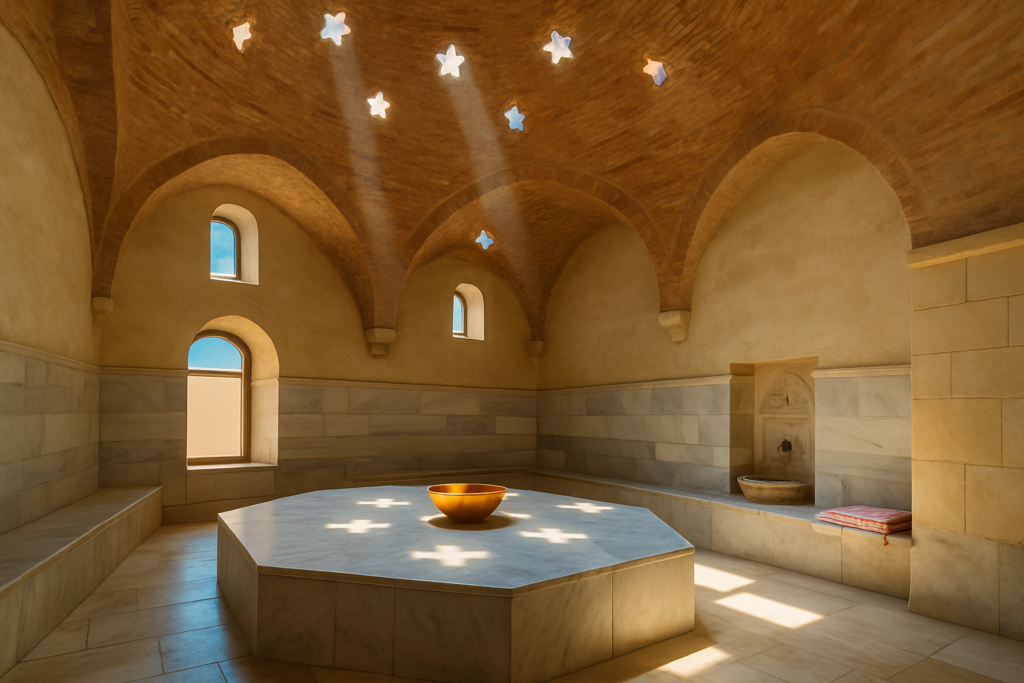
A classic Ottoman hamam is built around three linked rooms under domes pierced with small star shaped openings that let in daylight without direct sun.
The first room is the camekan, a cool entrance hall where visitors undress and are given a peştemal.
From there a corridor leads to the sıcaklık, the hot room, built around a heated marble platform called the göbek taşı or “belly stone.” This stone sits directly over the furnace and heating channels below the floor, a system called hypocaust heating, the same principle used in Roman baths centuries earlier.
Around the hot room, smaller private alcoves called halvet hold basins of hot and cold water for rinsing.
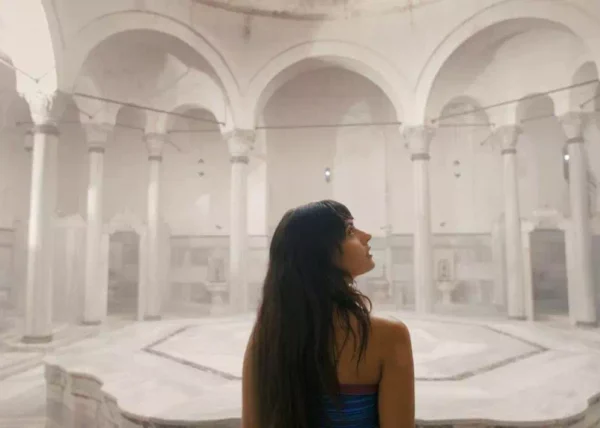
The domes themselves are the signature feature. Star shaped and crescent shaped glass openings puncture the stone, scattering light across the steam without a single electric bulb needed during the day. Photographs of Cağaloğlu Hamamı and Hürrem Sultan Hamamı almost always frame this dome from below, lying on the göbek taşı looking straight up.
What happens during a visit, room by room?
A hamam visit runs through five fixed stages: arrival and undressing, warming on the heated stone, the kese scrub, a foam massage, and a final cold rinse.
- Arrival in the camekan: a peştemal is provided and shoes come off.
- Warming on the göbek taşı: 10 to 20 minutes lying on the heated marble to open the pores before any scrubbing starts.
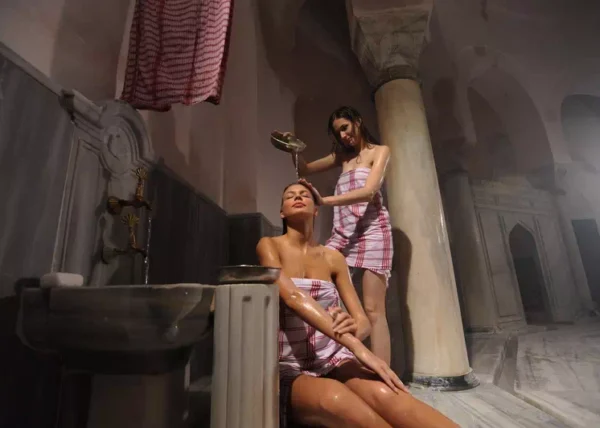
- The kese scrub: a coarse mitt called a kese is used by the attendant to remove dead skin, usually the part visitors remember most.
- Foam massage: a cotton bag is filled with soap and air and squeezed to produce a cloud of foam, worked over the body by hand.
- Final rinse: cool to cold water closes the sequence and signals the end of the hot room stage.
Male attendants are called tellak, female attendants are called natır. Most of the historic hamams, including Cağaloğlu Hamamı and Çemberlitaş Hamamı, keep separate sections for men and women with gender matched staff, so couples bathe in parallel rooms rather than together.
A small number of hamams, such as Şifa Hamamı in Sultanahmet, run as a mixed-gender hammam instead.
Readers unfamiliar with the etiquette around nudity, towels and tipping may want a plain explanation of hamam etiquette before booking.
How long does a visit take and what should you bring?
Most hamam sessions run between 45 and 135 minutes depending on the package chosen, and very little needs to be brought beyond basics.
Cağaloğlu Hamamı’s sessions range from 45 to 135 minutes, and Hürrem Sultan Hamamı’s from 45 to 110 minutes, according to the operator’s own booking pages as of October 2026.
The entry price across the platform’s listed hamams starts from €40 per person as of October 2026, with Cağaloğlu Hamamı and Çemberlitaş Hamamı each starting from €90 per person and Hürrem Sultan Hamamı from €110 per person, per the same source.
- Bring: a swimsuit if preferred (optional in most sections), flip-flops are provided, your own comb if you have long hair
- Provided: peştemal, slippers, soap and the kese mitt, towels for drying
- Not needed: your own towel, shampoo, or cash for the attendant unless you choose to tip
- Booking: instant online confirmation, arrive a few minutes before the session time
A traveller unsure how much time to set aside, especially with a flight or another tour booked the same day, may find the question answered directly in our breakdown of how long a hammam visit lasts.
Which hamam suits which kind of visitor?
Couples wanting shared architecture but separate bathing should choose Cağaloğlu Hamamı or Çemberlitaş Hamamı; families and first-timers on a tighter schedule should look at Gedikpaşa Hamamı or one of the modern spa hamams.
Çemberlitaş Hamamı sits closest to the tram line and is often the easiest first visit, with a shorter walk from Sultanahmet. Hürrem Sultan Hamamı, being the most architecturally significant of the three, suits visitors who want to see Sinan’s work specifically and are comfortable with the higher starting price.
Gedikpaşa Hamamı, starting from €50 per person, suits a shorter, less formal visit without the added cost of the two headline sites.
Visitors based away from the Old City, around Taksim, Şişli or Laleli, can use one of the platform’s modern spa hamams instead, each starting between €45 and €50 per person as of October 2026, with female-only therapist teams in those three locations.
A full comparison of the city’s bathhouses by area is laid out in our neighbourhood guide to top rated hamams, and travellers weighing the cost against other Istanbul spa options can check our pricing comparison for a Turkish bath in Istanbul.
For context on visiting hours and museum access near these sites, Türkiye’s official tourism portal is a reliable starting point: Türkiye’s official tourism portal.
Frequently Asked Questions
Is a hamam visit appropriate for couples?
Yes, but most historic hamams, including Cağaloğlu and Çemberlitaş, bathe men and women in separate sections rather than together, so couples should expect to part ways at the entrance and meet afterward.
Do I need to bring my own towel?
No. A peştemal, slippers and towels for drying are provided at every hamam listed on this site, so nothing beyond a swimsuit, if preferred, needs to be packed.
How much skin contact is involved in the kese scrub?
The kese mitt is used over the arms, legs, back and torso while the peştemal stays wrapped around the body, so full nudity is not required during the scrub itself.
Which is older, Cağaloğlu or Çemberlitaş?
Çemberlitaş Hamamı is older, built in 1584, while Cağaloğlu Hamamı dates to 1741, making it the newer of the two historic bathhouses.
Can children visit a historic hamam?
Families are welcome at most locations, though the long heated sessions and the kese scrub suit older children better; checking the specific hamam’s own policy before booking is sensible since practices vary by venue.
How far ahead should a hamam visit be booked?
A few days ahead is usually enough, since the booking is confirmed instantly online, but popular time slots at Cağaloğlu and Çemberlitaş fill first during the busier summer months.
Booking any of these hamams directly keeps the whole sequence, from the camekan to the final cold rinse, confirmed in one step rather than split across third party resellers. Visitors ready to choose a date and a bathhouse can book directly at istanbulhamam.com/shop.
Plan your Istanbul hammam visit
Ready to go? Book Cağaloğlu Hammam online with instant confirmation, or compare all Istanbul hammams to find your match.

Comments 0
No comments yet. Be the first to share your thoughts!