

A self-guided hammam experience offers a unique opportunity to connect with centuries-old bath culture while practicing wellness rituals at your own pace, without the need for an attendant or guided service.
Rooted in Ottoman and earlier Roman bathing traditions, hammams were designed not only for cleansing the body but also for calming the mind, restoring balance, and creating a social ritual centered on heat, water, and relaxation.
Today, many people wish to recreate or independently enjoy this ritual by learning traditional hammam techniques that can be applied in public baths, private hammams, or even adapted to home spa environments.
What Is a Self-Guided Hammam Experience?
A self-guided hammam experience refers to performing the core stages of a hammam ritual independently, allowing visitors to control the pace, intensity, and duration of each step while still respecting traditional practices.
This approach appeals especially to travelers, wellness enthusiasts, and those seeking privacy, as it emphasizes personal awareness of heat, hydration, and relaxation rather than structured treatment.
Preparing for the Hammam
Preparation is essential for an effective self-guided hammam ritual, as the body must gradually adapt to heat and humidity in order to fully benefit from the process.
Before entering the hot area, visitors typically change into a pestemal, a lightweight traditional towel that allows the skin to breathe while providing coverage and comfort.
It is also important to hydrate well before and after the session, as sweating plays a central role in cleansing during traditional hammam techniques.
Warming the Body
The first and most fundamental step of traditional hammam techniques is warming the body gradually by resting on a heated marble platform known as the gobektasi.
This stage allows muscles to relax, pores to open, and circulation to increase, creating ideal conditions for deep cleansing and exfoliation.
During a self-guided hammam experience, this phase should not be rushed, as proper warming determines the effectiveness of the steps that follow.

Scrubbing and Exfoliation
Once the body is fully warmed, exfoliation becomes the central cleansing technique, traditionally performed using a kese, a textured exfoliating glove.
By gently scrubbing the skin in long, controlled motions, dead skin cells are removed, leaving the surface refreshed and more receptive to moisture.
In a self-guided setting, attention should be paid to pressure and rhythm, ensuring that exfoliation remains invigorating rather than harsh.
Foam Washing
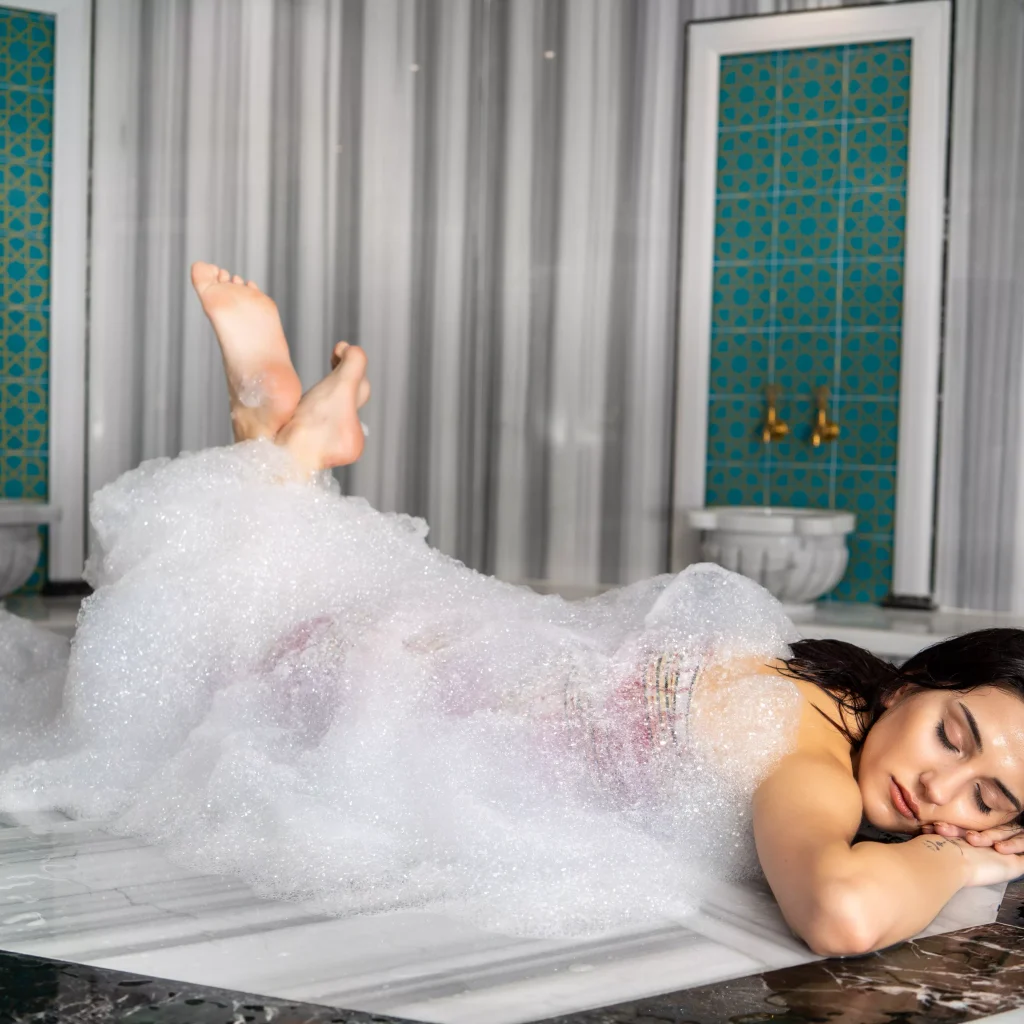
Foam washing represents one of the most iconic traditional hammam techniques, transforming simple soap and water into a deeply soothing sensory experience.
Warm water is combined with natural soap to create thick foam, which is then spread across the body to cleanse the skin while maintaining moisture.
This stage emphasizes slow movements and mindful breathing, reinforcing the calming nature of a self-guided hammam experience.
Rinsing and Cooling Down
After exfoliation and foam washing, the body is gently rinsed with warm or slightly cooler water to remove soap residue and regulate body temperature.
This transition from heat to mild cooling helps stimulate circulation and leaves the body feeling refreshed rather than fatigued.
Traditional hammam techniques encourage listening to the body during this phase, avoiding sudden temperature changes that may cause discomfort.
Rest and Relaxation
Resting is an essential yet often underestimated part of a self-guided hammam experience, as it allows the nervous system to fully absorb the benefits of heat and cleansing.
Wrapped in a dry pestemal, visitors typically relax in a cooler area while sipping water or herbal tea, allowing heart rate and breathing to normalize.
This final stage reinforces the hammam’s role not only as a place of physical cleansing but also as a space for mental restoration.
Why Self-Guided Hammam Techniques Still Matter
Practicing traditional hammam techniques independently fosters a deeper awareness of the body and encourages a more mindful approach to wellness.
In an era of fast-paced routines and digital distractions, the self-guided hammam experience offers a rare opportunity to slow down, reconnect with sensory awareness, and honor a ritual shaped by centuries of cultural knowledge.
By understanding and respecting these techniques, modern visitors can preserve the essence of hammam culture while adapting it to contemporary lifestyles.
For a deeper understanding of authentic hammam traditions and modern interpretations, you can explore resources available at istanbulhamam.com.
Wikipedia: Turkish bath


Comment (0)