

You are planning your trip to Turkey, your flight tickets are ready, and your itinerary is set. At the top of your to-do list is that famous, relaxing, and historical Turkish bath (hamam) experience. But when you look at the calendar, you realize your trip coincides with Ramadan, the holiest month of the Islamic world. Those justified questions immediately pop into your mind: “Are baths open during Ramadan?“, “Is it considered disrespectful to drink water around people who are fasting?”, “Will I experience a drop in service quality?”
First of all, take a deep breath and relax. Turkey is a tourist paradise that has welcomed different cultures and beliefs with great tolerance for centuries. Visiting a Turkish bath during Ramadan is not only possible, but it also offers the opportunity to experience the local culture in a much deeper and spiritual atmosphere. In this comprehensive guide, we examine step-by-step every detail, etiquette, and practical tip that tourists planning a bath visit during Ramadan need to know.
The Intersection of Ramadan and Turkish Bath Culture
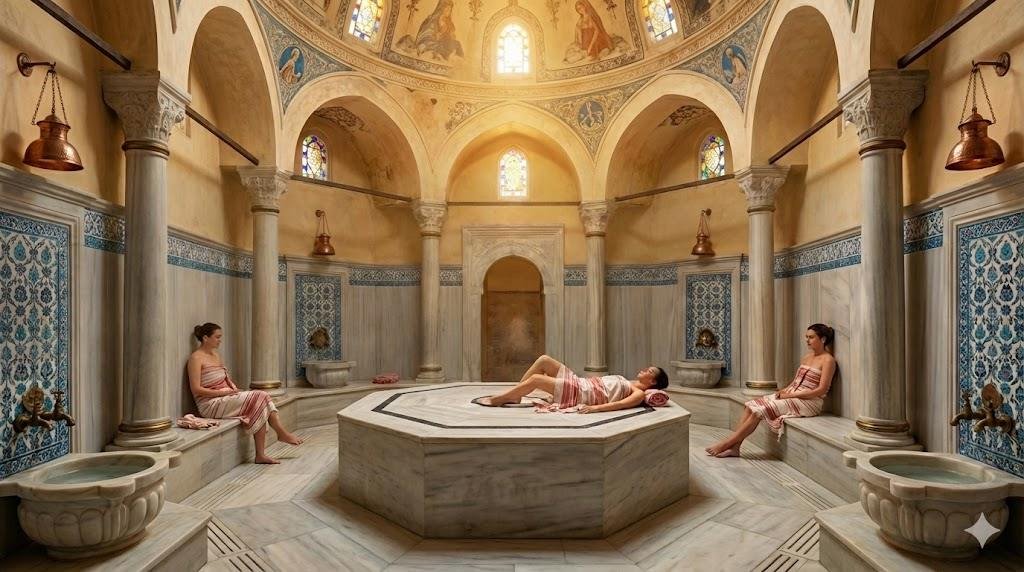
Baths in Turkish culture are far beyond being just places to wash and clean. For centuries, they have been centers of socialization, celebrations, and spiritual purification as well as physical cleansing. The great importance given to cleanliness in Islam becomes even more evident, especially during a holy month like Ramadan.
Going to the hamam during Ramadan is almost a ritual for the locals, especially after iftar (breaking the fast) or on the “Arife” (Eve) days just before the Eid holiday. The desire is to wake up on Eid morning with a completely purified body and mind. Therefore, baths do not fall silent during Ramadan; on the contrary, they gain their own unique inner rhythm at certain times of the day. Being in a bath during this period as a tourist means witnessing this centuries-old tradition of spiritual cleansing up close.
Are Baths Open in Ramadan? How Do Working Hours Change?
Let’s start with the most frequently asked question: Yes, almost all of the touristic and historical baths in Turkey are open every day throughout the month of Ramadan. World-famous baths in Istanbul such as Çemberlitaş, Ayasofya Hürrem Sultan, Cağaloğlu, or Kılıç Ali Paşa continue their routine services as they are accustomed to hosting foreign guests.
However, the peak hours during the day take on a character specific to Ramadan. Keeping these hour changes in mind while planning your visit will directly affect the pleasure you get from the experience.
A Vital Detail: Water Consumption Inside
Turkish baths are naturally very hot and high-humidity environments. A standard scrubbing and foam massage process lasts between 45 minutes and 1 hour. During this time, you lose a significant amount of fluid through sweating.
The biggest concern of tourists is whether it is rude to drink water next to fasting people. In touristic baths, the operators are aware that your health is paramount. For this reason, water or traditional sherbet treats continue to be served to you. There is no harm in drinking your water. Just out of courtesy, instead of drinking water openly and showily, consuming it in the resting areas (in the cooling section) or in a more discreet way will be appreciated as a thoughtful and respectful gesture.
Etiquette and Empathy Towards Fasting Staff
The leading actors of your bath experience are the tellaks (male masseurs) and natırs (female masseuses). Scrubbing and massaging for hours on hard marbles, under intense steam, and using intense physical strength is already a difficult profession. Add 14-15 hours of hunger and thirst to this, and you can guess how challenging the situation can be.
Some sensitive points you should pay attention to as a tourist during this process are:
- Be Aware of the Pace: If your massage is progressing with slightly less pressure or slower than normal, remember that this may be due to the fatigue of the staff and try to be understanding.
- Leave Room for Rest: When moving from the scrubbing process to the foam massage, the staff may want to catch their breath for a few minutes. Give them this time by simply relaxing and enjoying the hot marble (göbektaşı) in the meantime.
- Generosity in Tipping: Tipping is an integral part of bath culture in Turkey. During Ramadan, leaving a tip slightly above the standard for these workers who serve you under those difficult conditions will both make them smile and make a beautiful contribution to the concept of “Ramadan abundance” in the local culture.
The Difference Between Touristic Baths and Neighborhood Baths
During your trip, you may see a small, local “neighborhood bath” on the street where your hotel is located. Unlike touristic and large baths, Ramadan rules can be applied much more strictly in these small businesses that serve entirely to the local people.
Some neighborhood baths may change their hours to be completely closed during the day and only serve after iftar until sahur (the pre-dawn meal). In addition, you are highly likely to experience a language barrier in these places. Therefore, especially if it is your first bath experience and it coincides with Ramadan, it will be much safer and more comfortable to choose well-known historical baths with professional tourist hosting standards or the baths in the SPA centers of 5-star hotels.
Frequently Asked Questions Specific to Ramadan
What should I wear in the bath? Do the rules change in Ramadan? Dress codes do not change during Ramadan. Men are given a “peştamal” (traditional towel) at the entrance and are asked to stay with this cover inside. Being completely naked is strictly forbidden in Turkish baths. For women, it is generally recommended to wear a bikini bottom or use the disposable lower underwear provided by the business. A peştamal is used again to cover the upper part of the body.
Can men and women enter the bath together? Traditional Turkish baths have separate sections for men and women, or the same venue serves different genders at different times of the day. If you want to experience a bath with your spouse or partner at the same time, you need to rent the private SPA rooms of luxury hotels. There is no mixed (unisex) use in historical baths.
Do I have to make a reservation? Absolutely yes. Especially as the last days of Ramadan approach (due to Eid preparations), the baths get packed. If your trip coincides with the Eid holiday, you may need to book weeks in advance. Even on normal Ramadan days, making an appointment a day in advance for the early morning hours saves you from waiting at the door.
What happens if I am in the bath at iftar time? Due to the locals and staff breaking their fast, life comes to a standstill in the baths for a short time at iftar time (evening prayer time). If you happen to be inside at that time, it would be best to go to the resting area and wait for the staff to have their iftar. In fact, many hospitable businesses are more than happy to make the tourists inside a part of this cultural moment by offering them iftar treats (dates, olives, pita bread).
Get Ready for an Unforgettable Experience
Visiting Turkey during Ramadan is a unique cultural experience in itself. Iftar tents on the streets, mahyas (illuminated messages) strung between minarets, and the smell of hot pita bread rising from the bakeries reflect the spirit of this month. Joining this spiritual atmosphere under the dome of a Turkish bath, accompanied by hot waters and sweet-smelling soaps, will truly crown your trip.
By planning your hours correctly, not neglecting to drink plenty of water, and showing respect for the situation of the people serving you, you can have a wonderful purification session that you will remember for a lifetime. Have a good rest and pleasant travels in advance!
Source: Wikipedia


Comment (0)